A QA-focused technical reference on defect mechanisms, root-cause paths, NDT coverage, and design-process controls for precision investment castings.
Direct Answer: Investment casting defects fall into five main categories - gas porosity (from dissolved hydrogen or trapped air), shrinkage porosity (from inadequate feeding during solidification), hot tearing (from restrained contraction at high temperatures), surface defects (shell-related or pouring-related), and dimensional deviations (from tooling wear or wax pattern distortion). Most defects can be prevented through proper gating and riser design, controlled pouring parameters, shell quality management, and rigorous NDT inspection using radiographic, ultrasonic, magnetic particle, and penetrant testing methods per ASTM standards.
Key Entities: investment casting, lost-wax casting, shrinkage porosity, gas porosity, hot tearing, NDT, radiographic testing, ultrasonic testing, ASTM E446, ASTM A609, MSS SP-55, ISO 8062, directional solidification, gating system.
Matson Foundry is an ISO 9001 certified precision investment casting facility with a comprehensive NDT lab. This guide is intended for quality and sourcing teams that need to connect defect root causes to actionable controls in drawings, process windows, and inspection plans.
In investment casting, rejection is usually not created by one isolated process deviation. Most defects reflect a chain reaction among geometry, shell quality, melt condition, and feeding behavior during solidification. If teams wait until final inspection to react, scrap cost escalates because machining, heat treatment, and logistics have already consumed cycle time and margin. Prevention must therefore start at design review and process planning rather than at end-of-line sorting.
From a procurement perspective, defect instability also introduces schedule and qualification risk that cannot be solved with pricing pressure alone. Incoming lots with variable porosity or dimensional drift force repeated concession workflows, delayed PPAP approvals, and higher inventory buffers at both supplier and customer sites. A prevention-led quality model improves technical quality and commercial predictability at the same time.
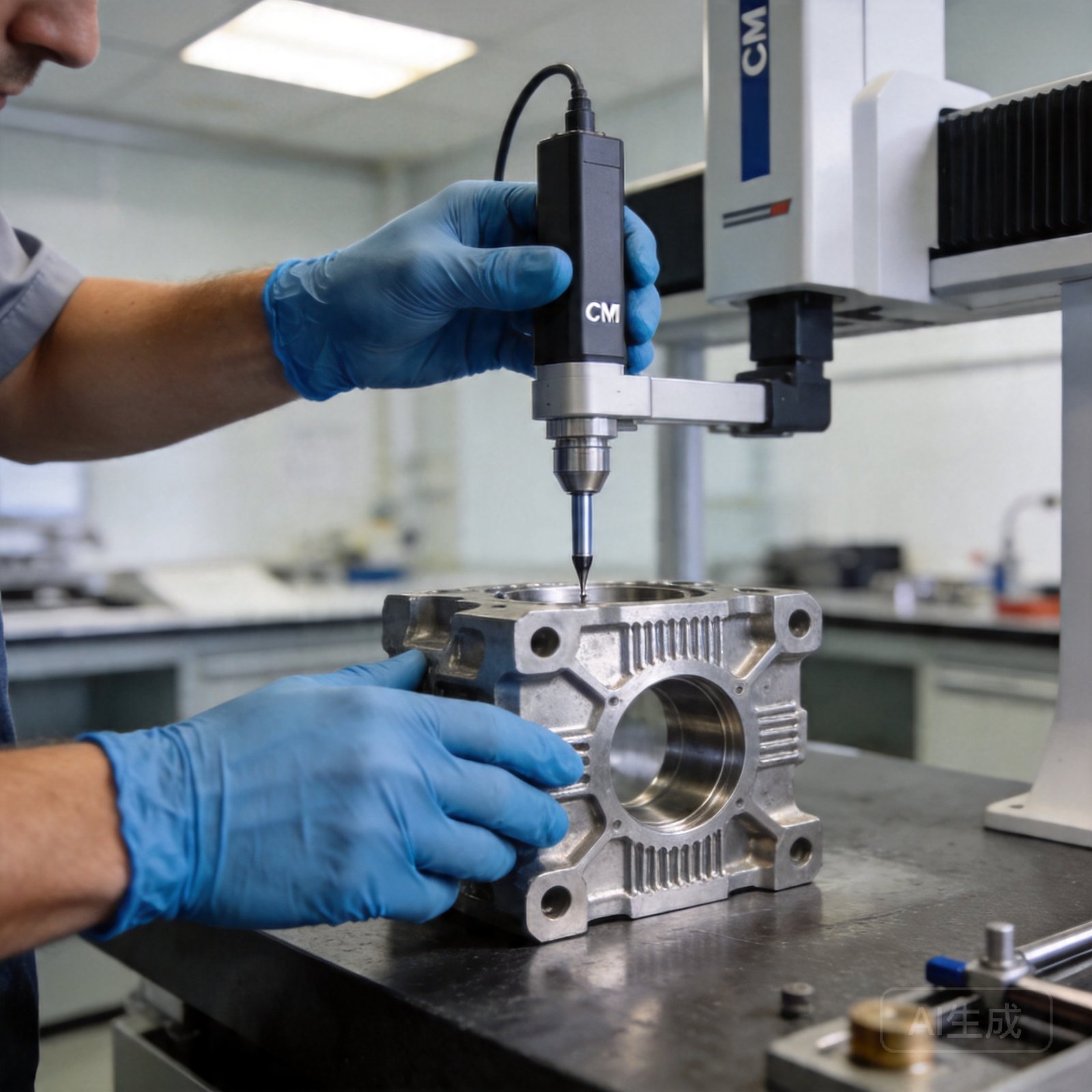
A robust quality framework links each defect family to mechanism, measurable causes, and preventive controls across tooling, shell, melt, and inspection stages. The five major categories in precision investment casting are gas porosity, shrinkage porosity, hot tearing, surface defects, and dimensional defects. Each category is explained below in mechanism -> causes -> prevention format.
For design-side controls that reduce defect risk before tooling release, see Investment Casting Design Guide: 10 Essential Rules for Castable Parts.
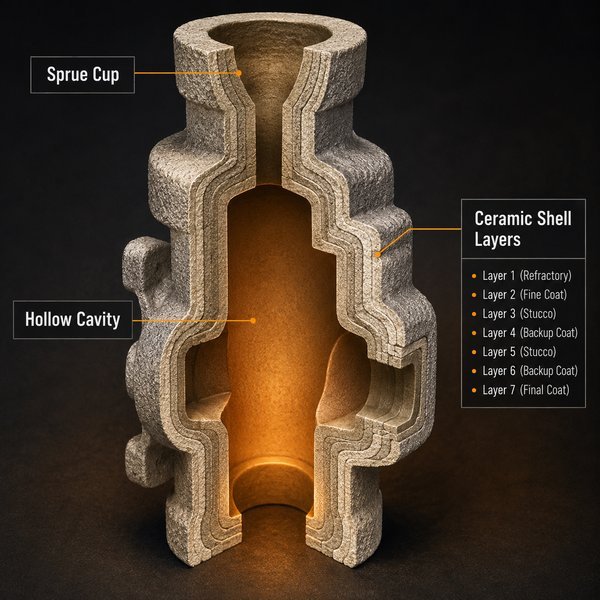
Mechanism: Gas porosity forms when dissolved gases or trapped air cannot escape before local solidification blocks vent paths. Pinhole porosity appears as fine dispersed voids; blowholes are larger cavities associated with turbulent or aspirated filling zones.
Causes: Frequent causes include hydrogen pickup from damp charge materials, shell residual moisture after dewax and firing, low shell permeability, unstable pouring stream, and gate geometry that promotes aspiration. High superheat can further increase gas solubility and delay bubble rejection. In complex wax trees, poor vent orientation can retain gas at local high points despite acceptable average parameters.
Another recurring source is process interaction rather than a single parameter breach: for example, nominally acceptable shell moisture combined with marginal venting and high fill turbulence can produce clustered blowholes in repeat locations. This is why gas porosity troubleshooting should review the entire process chain, including wax assembly orientation, shell drainage behavior, and metal transfer stability, instead of changing only one furnace parameter.
Prevention: Apply moisture control from charge storage through shell drying verification, stabilize melt handling and pour stream, and design gates to reduce turbulence and abrupt flow reversals. Confirm shell venting and permeability for the target alloy and section profile. For repeat projects, use radiographic trending and process capability tracking to correlate porosity maps with fill time, pour temperature, and shell condition.
Mechanism: Shrinkage porosity occurs when liquid feed metal cannot compensate volumetric contraction during solidification. Macro-shrinkage appears as larger centerline or cavity defects, while micro-porosity forms as fine interdendritic void networks that can degrade pressure integrity and fatigue life.
Causes: Root causes include weak directional solidification, undersized feed connections, gates freezing too early, and hidden thermal masses at section transitions. Shrinkage is common around boss-to-wall intersections, flange roots, and thick-thin transitions where modulus distribution is unfavorable. Process variation in shell preheat and pouring temperature can amplify these risks.
In quality audits, shrinkage defects are often misclassified as random internal porosity when section-by-section solidification order has not been validated. Without thermal hierarchy confirmation, foundries may chase chemistry or furnace adjustments while the core issue remains feed-path interruption. Consistent cross-functional review of simulation outputs, cut-up samples, and RT indications is essential to avoid this failure loop.
Prevention: Design for directional solidification by smoothing transitions, minimizing isolated heavy sections, and aligning gate and riser positions with thermal flow paths. Validate feeding continuity using simulation for critical parts before tooling freeze. In production, hold stable thermal windows and inspect predicted hot spots with targeted NDT rather than generic sampling only.
Mechanism: Hot tearing develops near final solidification when semisolid metal has low ductility and cannot absorb restrained contraction strain. It appears as irregular crack-like discontinuities, often at sharp corners or rigidly constrained junctions.
Causes: Major contributors are insufficient fillet radii, abrupt section transitions, and geometry that locks contraction paths between heavy and thin features. Process-side factors include excessive pouring temperature, shell properties that increase restraint, and uneven cooling gradients. Alloy sensitivity to freezing-range behavior also affects tearing susceptibility.
Hot tearing risk rises significantly in parts that combine rigid ring-like geometry with heavy localized bosses, because contraction is mechanically constrained while feeding remains weak. In these scenarios, NDT may detect variable crack morphology from lot to lot, giving the false impression of inconsistent inspection rather than a persistent thermo-mechanical design issue.
Prevention: The highest-impact action is geometric stress relief: add fillet radii, equalize section changes, and avoid rigid contraction lock points. Then tune process controls around stable pour temperature, shell behavior, and local thermal management. Because hot tears can be partly planar, combine volumetric and surface-sensitive NDT methods to improve detection confidence.
Mechanism: Shell-related defects occur when mold integrity and mold-metal interface behavior deviate from stable conditions. Typical outcomes include roughness excursions, metal penetration, shell scab transfer, and local inclusion signatures from refractory detachment.
Causes: Typical causes include slurry viscosity drift, poor primary coat consistency, incomplete drying between dips, shell microcracking after dewax, and contamination in stucco media. Complex geometry can increase local shell thickness variation and drainage imbalance across the same tree.
Mechanism and Causes: Pouring-related defects include cold laps, misruns, and oxide fold marks from unstable stream behavior, low local metal temperature, and oxidation exposure during fill. Abrupt gate transitions and turbulent entry intensify this risk, especially when shell preheat and transfer timing are inconsistent.
When these defects appear intermittently, teams should compare furnace tap-to-pour time, shell preheat hold time, and mold queue discipline by shift. Many plants discover that nominal process settings are adequate, but execution timing drift creates localized underfill and oxide-film defects that mimic tooling or shell problems.
Prevention: Use strict shell controls for slurry properties, dip sequence, and drying verification, then hold pouring parameters inside a validated thermal window. Define visual acceptance references and apply penetrant checks to high-risk features when surface class requirements are stringent. Tie shell quality records to rejection data to identify systemic drift rapidly.
Mechanism: Dimensional defects are cumulative stack-up errors across wax tooling, shell growth, thermal contraction, and post-cast distortion. Typical outcomes are linear out-of-tolerance conditions, geometric distortion, and datum relationship shifts.
Causes: Frequent causes include tooling wear, wax pattern deformation during handling, shell inconsistency, uncontrolled cooling gradients, and heat-treatment movement on asymmetric geometry. When machining datums are not planned around as-cast variability, dimensional escapes can occur even with acceptable casting integrity.
Dimensional instability is particularly expensive because it often appears after substantial value-add operations. A part can pass integrity NDT and still fail final machining or gauge fit if datum strategy is not matched to casting behavior. This is why dimensional control plans should include as-cast CMM checkpoints on selected features before major downstream processing.
Prevention: Align tolerance allocation with process capability, keep tight limits on machined critical features, and reference ISO 8062 classes during design review. Use first-article and CMM feedback loops to calibrate wax and tooling controls. For recurring distortion, review fixture strategy, heat-treatment profile, and geometry balance together.
Our inspection approach layers methods by defect morphology and feature criticality. Learn more at Learn more about our NDT capabilities and quality system.
Visual inspection is the first screen for surface quality, gate removal condition, and obvious process signatures. MSS SP-55 comparators are commonly used to standardize steel casting surface acceptance and reduce subjective grading differences.
RT is highly effective for volumetric internal defects such as shrinkage cavities, gas porosity, and certain inclusions. ASTM E446 reference radiographs support consistent severity classification and lot disposition for pressure-boundary and structurally critical features.
For pressure-retaining components, RT planning should define viewing angles and sensitivity based on predicted defect orientation and section thickness, not just a fixed percentage of parts. This approach improves detection probability in known thermal-risk zones and avoids false confidence from low-value generic coverage.
UT provides efficient subsurface assessment where geometry and coupling are suitable. ASTM A609 is widely referenced for steel casting acceptance. Method planning should account for sound path and feature orientation to avoid false indications and blind zones.
Magnetic particle testing per ASTM E1444 is used on ferromagnetic materials for near-surface discontinuities. Liquid penetrant testing per ASTM E165 is used across wider alloy families and is sensitive to tight surface-breaking cracks and laps. These methods complement RT and UT by covering planar and surface-connected defects.
A mature NDT strategy is method-fit, not method-volume: each feature gets the right inspection route based on failure mode and service risk.
Our ISO 9001 certified quality management system ties design review, process controls, and final verification into a closed-loop quality framework.
This checklist is most effective when used as a release gate, not as a post-failure report. During kickoff, assign ownership for each checklist item across design, foundry engineering, quality, and procurement. During first article, verify each item against objective evidence: simulation snapshots, control-plan records, NDT reports, and dimensional data. This converts preventive intent into repeatable execution.
Porosity is caused by gas entrapment (pinhole/blowhole) or by inadequate feeding during solidification (shrinkage porosity). Gas sources include dissolved hydrogen in the melt, air trapped in the shell, or moisture in refractory materials.
Common NDT methods include visual inspection (MSS SP-55), radiographic testing (RT per ASTM E446), ultrasonic testing (UT per ASTM A609), magnetic particle testing (MT per ASTM E1444), and liquid penetrant testing (PT per ASTM E165).
Hot tearing is prevented by avoiding sharp corners (use fillet radii), ensuring uniform wall sections, controlling pouring temperature, optimizing shell permeability, and in some cases using chills to control cooling rates.
Shrinkage porosity is among the most common defects, especially in heavy sections and around geometry transitions. It occurs when liquid metal cannot feed the solidifying region, leaving interdendritic voids. Proper gating, riser design, and directional solidification techniques can prevent it.
No. Radiographic testing (RT) detects internal volumetric defects like shrinkage, gas porosity, and inclusions, but is less sensitive to thin planar defects such as hot tears, surface cracks, and tight laps. Surface-breaking defects are better detected by liquid penetrant (PT) or magnetic particle (MT) methods.
Share your drawings and critical quality requirements. Our team will return a Design for Quality review with defect-risk controls and recommended inspection routes.