Pump Body Investment Casting

Pump casings carry complex internal hydraulic passages and a pressure boundary, so the casting method directly shapes efficiency, machining cost, and reliability. Here is how pump bodies are investment cast, which materials suit which fluids, and how the castings are proven.

Reviewed by Matson Foundry engineering · Published 15 June 2026 · Last updated 15 June 2026

Direct answer: Pump bodies are investment cast by the lost-wax process: a wax pattern is coated in a ceramic shell, melted out, and replaced with molten alloy. This produces casings close to net shape with a fine surface (Ra 1.6–3.2 µm) and tight tolerance (about ±0.1 mm), capturing complex internal hydraulic passages with minimal machining. Common materials are stainless A351 CF8/CF8M, duplex stainless, and carbon steel A216 WCB, chosen by pumped fluid. Castings are verified with NDT and a hydrostatic test.

Why Pump Bodies Are Investment Cast

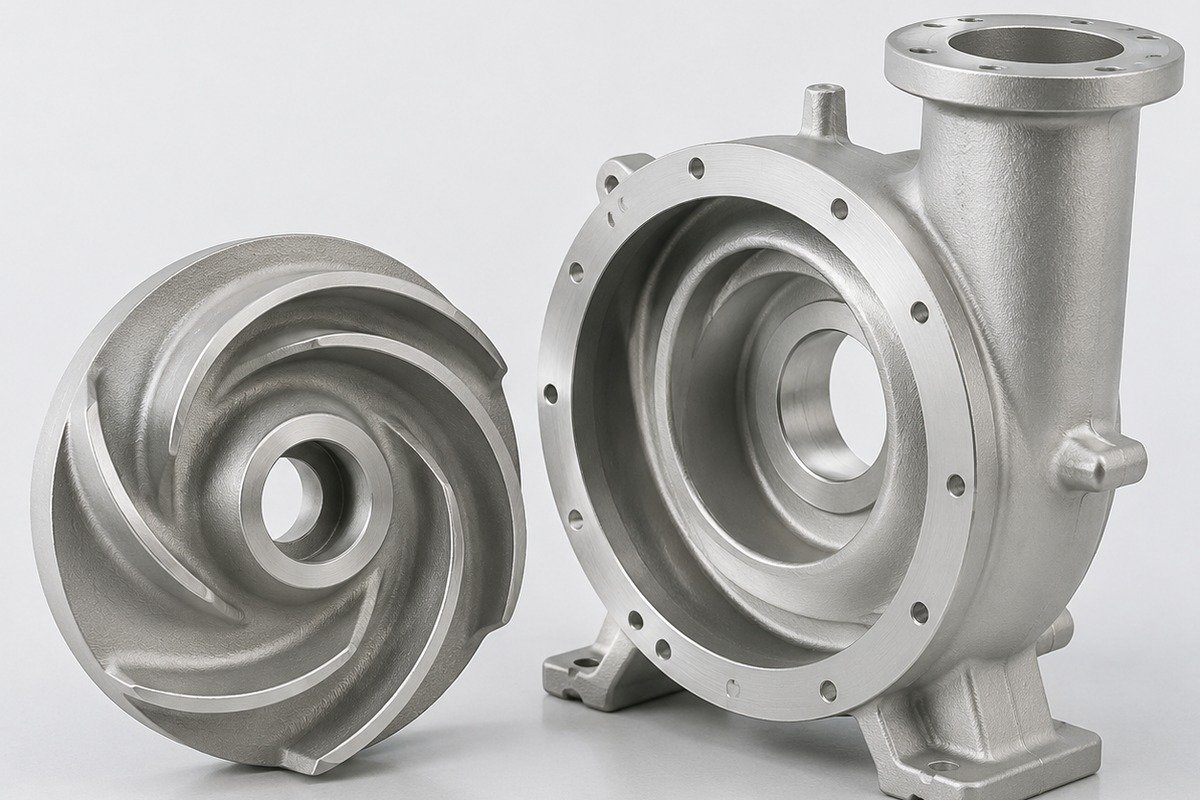
A pump casing is more than a container: its internal volute and passage geometry sets hydraulic efficiency, while the casing wall is a pressure boundary. Investment casting suits both demands because it reproduces complex internal shapes near net and leaves a smooth as-cast surface, so flow passages stay close to the designed profile and sealing faces need only light finishing. That combination of geometric complexity plus fine finish is why small-to-medium pump bodies in stainless and alloy steels are routinely investment cast rather than fabricated.

Investment cast pump body showing internal hydraulic passages
An investment-cast pump casing reproduces complex internal passages close to net shape.

The Investment Casting Process for Pump Casings

The lost-wax route follows a fixed sequence, with each step tuned for the casing's passages and pressure boundary:

  1. Wax injection — a wax pattern of the casing is formed in a die, including cores for internal passages.
  2. Assembly — patterns are attached to a wax runner tree to feed multiple parts in one pour.
  3. Shell building — the tree is repeatedly dipped in ceramic slurry and stuccoed to grow a hard shell.
  4. Dewax — the wax is melted out in an autoclave, leaving a hollow ceramic mold.
  5. Firing & pour — the shell is fired for strength, then filled with molten alloy.
  6. Knockout & cut-off — the shell is removed and parts are cut from the tree.
  7. Finishing — heat treatment, NDT, and machining of sealing faces and mounting interfaces.

For a fuller walkthrough of the same process applied to other parts, see our investment casting service overview.

Materials for Cast Pump Bodies

Material is matched to the pumped fluid, temperature, and pressure. The common families, with ASTM grades per ASTM International, are:

MaterialTypical GradeBest For
Austenitic stainlessA351 CF8 / CF8MWater, mild chemical, food and general corrosion service
Duplex stainlessCD3MN (2205-type)Higher strength and chloride resistance (seawater, brine)
Carbon steelA216 WCBGeneral industrial water and non-corrosive service
Bronze / Ni-Al bronzeC95800-typeSeawater and marine pump bodies

For full alloy chemistry and mechanical properties, see our casting alloy comparison chart; for the stainless family specifically, the stainless steel materials guide.

Benefits for Hydraulic Performance

Because the casing arrives close to net shape, the as-cast passages stay near the designed hydraulic profile, helping preserve efficiency and reduce turbulence. The fine surface finish lowers internal flow losses and gives clean sealing faces with little machining — investment casting can cut downstream machining by up to about 40% versus sand casting on the critical faces. Thin walls and integral features (mounting bosses, ports) can be cast in, reducing assembly and weight. The trade-off is wax-die tooling cost, which favors medium-to-high volume; for very large casings, sand casting still wins on size, as covered in our casting methods comparison.

Quality & Pressure Testing

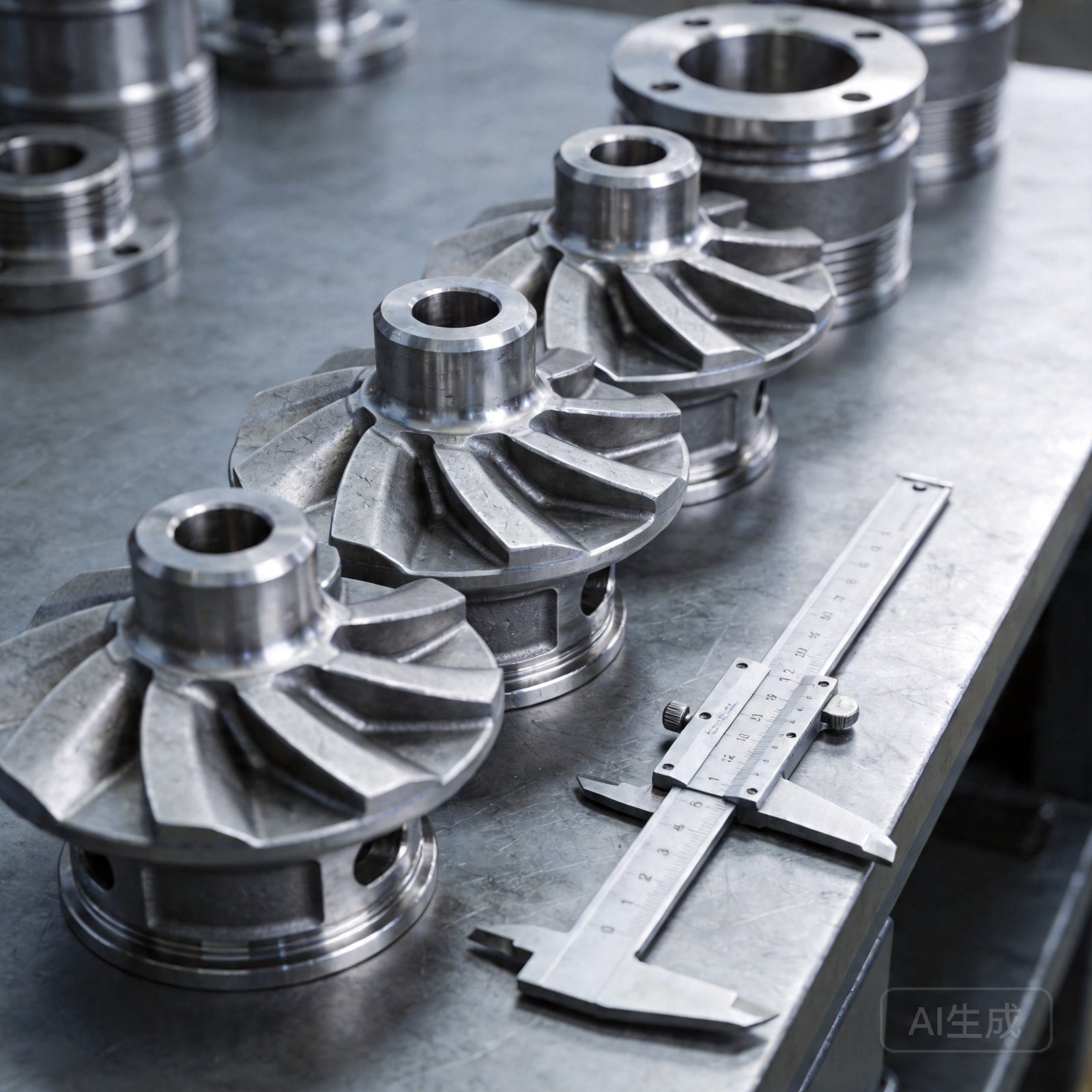
A pump body is a pressure boundary, so soundness is verified before it ships. Surface defects are caught with dye-penetrant or magnetic-particle inspection; internal soundness at the pressure boundary is checked with radiographic or ultrasonic testing. Dimensional inspection confirms passage and flange geometry, and a hydrostatic test validates the casing against leaks. Material is confirmed against the specified ASTM grade by chemical and mechanical testing. Pair the right alloy with the right process and verification, and the cast casing meets both its hydraulic and pressure-integrity requirements.

Finished cast pump assemblies undergoing quality inspection
Finished pump castings are dimensionally inspected and pressure tested before assembly.

Frequently Asked Questions

What is pump body investment casting?

Pump body investment casting uses the lost-wax process to produce pump casings, volutes and housings close to net shape. A wax pattern is coated in a ceramic shell, melted out, and replaced with molten metal. The result captures complex internal hydraulic passages with a fine surface, reducing machining on flow surfaces and sealing faces.

What is the investment casting process for a pump casing?

The steps are: inject wax to form the pattern, assemble patterns on a runner tree, build a ceramic shell by repeated dipping and stuccoing, dewax in an autoclave, fire the shell, pour molten alloy, knock off the shell, and cut parts from the tree. The casing is then heat treated, inspected, and finish machined on critical faces.

Which materials are used for cast pump bodies?

Common choices are austenitic stainless steel (ASTM A351 CF8/CF8M) for corrosive or water service, duplex stainless for higher strength and chloride resistance, carbon steel (A216 WCB) for general service, and bronze or nickel alloys for seawater and chemical duty. Material is matched to the pumped fluid, temperature, and pressure.

Why use investment casting instead of sand casting for pump bodies?

Investment casting gives tighter tolerances (about ±0.1 mm) and a smoother surface, which matters for the internal hydraulic passages and sealing faces that drive pump efficiency. It reduces machining and improves flow surfaces. Sand casting is still chosen for very large casings where size outweighs as-cast precision.

How are cast pump bodies tested for quality?

Pump castings are checked with dye-penetrant or magnetic-particle inspection for surface defects and radiographic or ultrasonic testing for internal soundness, especially at the pressure boundary. Dimensional checks confirm passage geometry, and a hydrostatic pressure test validates the casing before assembly. Material is verified against the specified ASTM grade.
Need investment-cast pump bodies?

Share your pump type, pumped fluid, pressure, and volume. We will recommend the alloy and casting plan to balance efficiency, machining, and cost.

Request a Quote Pump Parts