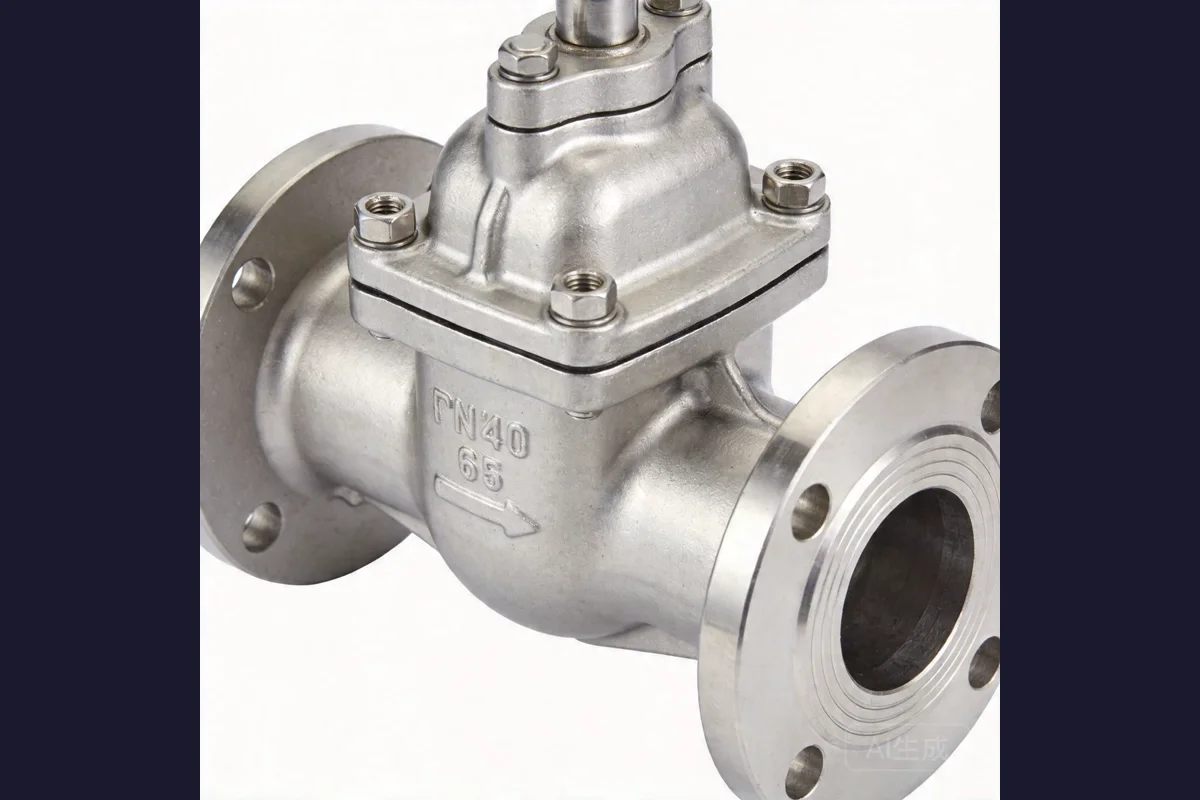
A side-by-side reference for the cast steel and stainless steel alloys used in valve, pump, and industrial castings — with ASTM grade, minimum mechanical properties, service-temperature range, and where each grade fits.
Direct answer: The most common casting alloys group into three families: carbon steels (A216 WCB/WCC for general service, A352 LCB/LCC for low temperature), chromium-moly alloy steels (A217 WC6/WC9 for elevated temperature), and austenitic stainless steels (A351 CF8 = 304, CF8M = 316 with molybdenum for chloride resistance). Select by matching alloy class to your service medium, temperature, and required strength, then confirm the exact ASTM minimums for the grade.
Every value below is an ASTM specification minimum — the guaranteed floor a qualified casting must meet, not a typical test result. Use these numbers to specify and rate parts; actual properties usually exceed them. Pick a family by service environment first, then choose the grade by temperature and strength, and always confirm the current ASTM edition for the exact figures.
| Grade (ASTM) | Family | Tensile min | Yield min | Elong. min | Service temp | Typical use |
|---|---|---|---|---|---|---|
| WCB (A216) | Carbon steel | 485 MPa (70 ksi) | 250 MPa (36 ksi) | 22% | −30 to +425 °C | General water, oil & gas |
| WCC (A216) | Carbon steel | 485 MPa (70 ksi) | 275 MPa (40 ksi) | 20% | to +425 °C | Higher-strength carbon bodies |
| LCB (A352) | Carbon, low-temp | 450 MPa (65 ksi) | 240 MPa (35 ksi) | 24% | to −46 °C | Low-temperature service |
| LCC (A352) | Carbon, low-temp | 450 MPa (65 ksi) | 275 MPa (40 ksi) | 24% | to −46 °C | Low-temp, higher strength |
| WC6 (A217) | Cr-Mo alloy (1.25Cr-0.5Mo) | 485 MPa (70 ksi) | 275 MPa (40 ksi) | 20% | Elevated / creep | Steam & power service |
| WC9 (A217) | Cr-Mo alloy (2.25Cr-1Mo) | 485 MPa (70 ksi) | 275 MPa (40 ksi) | 20% | Elevated / creep | Higher-temp steam, refinery |
| CF8 (A351) | Stainless (304) | 450 MPa (65 ksi) | 195 MPa (28 ksi) | 35% | −268 to +649 °C | General corrosion service |
| CF8M (A351) | Stainless (316, +Mo) | 485 MPa (70 ksi) | 205 MPa (30 ksi) | 30% | −268 to +649 °C | Chloride / chemical corrosion |
| CF3 (A351) | Stainless (304L) | 450 MPa (65 ksi) | 195 MPa (28 ksi) | 35% | to +425 °C | Weldable, low-carbon |
| CF3M (A351) | Stainless (316L) | 485 MPa (70 ksi) | 205 MPa (30 ksi) | 30% | to +425 °C | Weldable, +Mo |
Values are ASTM minimums for castings; verify against the current standard edition before specifying.
Three numbers drive most casting selection. Tensile strength is the maximum stress the material withstands before fracture — a ceiling, useful for comparing grades but rarely the design limit. Yield strength is where permanent deformation begins; it is the number pressure-boundary design actually leans on, because a valve or pump body must not yield under rated pressure. Elongation measures ductility — how much the metal stretches before breaking — and is a proxy for toughness and forgiveness under shock or thermal cycling. A high-yield grade with low elongation can be strong but brittle, which is exactly why low-temperature service adds impact testing on top of these minimums.
For castings specifically, remember these are foundry minimums on separately cast test bars; section thickness, solidification rate, and heat treatment all influence the properties in the actual part, which is why qualified foundries control melt practice and verify with mechanical and NDT testing.
The austenitic stainless grades are the corrosion workhorses. CF8 (cast 304) handles general corrosion and a very wide temperature band, from cryogenic to about +649 °C. CF8M (cast 316) adds roughly 2–3% molybdenum, which sharply improves resistance to pitting and crevice attack in chlorides and chemical media — the default choice for seawater, chemical, and chloride service. The low-carbon variants CF3 and CF3M trade a little high-temperature strength for better weldability and resistance to sensitization. For a deeper treatment, see our stainless steel casting grades guide.

WCB is the standard carbon steel casting grade for non-corrosive water, oil, and gas from about −30 to +425 °C; WCC offers higher yield strength for the same service window. Below roughly −20 °F, plain WCB can turn brittle — so for cold service you specify LCB or LCC under A352, which mandate Charpy impact testing at the design minimum temperature to guarantee toughness down to around −46 °C.
When the service is hot enough that carbon steel would creep, chromium-molybdenum alloy steels take over. WC6 (1.25Cr-0.5Mo) and WC9 (2.25Cr-1Mo) add creep strength and oxidation resistance for steam, power-generation, and refinery service, with WC9's higher chromium suiting the higher temperatures. Both carry a 485 MPa minimum tensile and 275 MPa minimum yield.
Beyond the common grades, two specialty families appear in demanding castings. Duplex stainless (ASTM A890, e.g. grade 4A / CD3MN) combines austenitic and ferritic structure for high strength plus excellent chloride pitting and stress-corrosion resistance — common in seawater and sour service. Cast 17-4PH (ASTM A747 CB7Cu-1) is a precipitation-hardening martensitic stainless that reaches very high strength after heat treatment while keeping moderate corrosion resistance. Both are specified separately, with properties set by the chosen heat-treat condition rather than a single minimum — confirm the exact grade and condition with your foundry.
Work in this order:

Then confirm the ASTM minimums for the chosen grade and pressure class. Our team can cross-check the selection against your valve casting or process requirements.
Both are austenitic stainless casting grades under ASTM A351. CF8 is the cast equivalent of 304 stainless; CF8M is the cast equivalent of 316 and adds about 2–3% molybdenum, which significantly improves resistance to pitting and crevice corrosion in chloride and chemical-process environments. CF8M also carries a slightly higher minimum tensile strength (485 MPa vs 450 MPa).
Standard carbon steel WCB has no guaranteed impact toughness and can become brittle below about −20 °F (−30 °C). For service below that, specify ASTM A352 LCB or LCC, which require Charpy impact testing at the design minimum temperature to ensure ductility down to roughly −46 °C.
Among the common cast grades shown here, the chromium-moly alloy steels (WC6, WC9) and higher-strength carbon grades (WCC, LCC) carry the highest minimum yield strength at around 275 MPa (40 ksi). For much higher strength, precipitation-hardening grades such as cast 17-4PH (ASTM A747 CB7Cu-1) are used, but they require heat treatment and a separate specification.
The values in this chart are ASTM specification minimums — the guaranteed floor a qualified casting must meet. Actual (typical) properties are usually higher. Design to the ASTM minimums; use typical values only for rough comparison, never for rating a pressure boundary.
No. This chart focuses on the common carbon, alloy, and austenitic stainless casting grades. Duplex stainless castings (ASTM A890) and high-nickel alloys are specified separately when severe chloride, sour-service, or high-strength corrosion resistance is required.
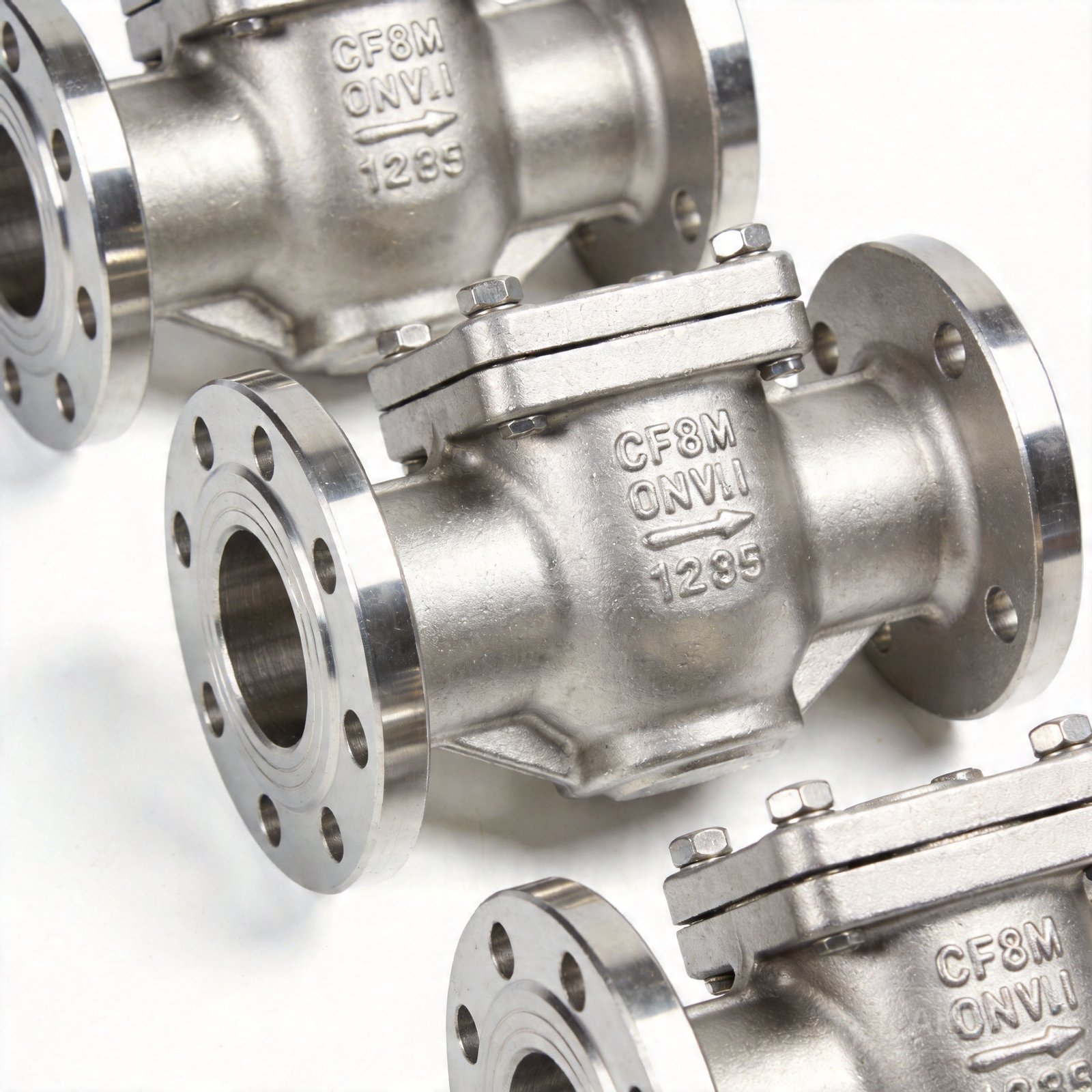
Tell us the service medium, temperature, and pressure class. Our metallurgists will recommend the right cast grade and confirm the ASTM minimums for your application.