CF8M vs CF8 vs 316 Stainless: Casting Grade Comparison

How the cast stainless grades CF8 and CF8M relate to wrought 316 and 304, what molybdenum changes, and how to choose between them for cast valve and pump parts.

Direct answer: CF8 is the cast equivalent of 304 and CF8M is the cast equivalent of 316; the difference between CF8 and CF8M is the ~2–3% molybdenum in CF8M that resists chloride pitting. CF8M and 316 share that chemistry — CF8M is cast to shape, 316 is wrought. Choose CF8M (or 316) for chloride service, CF8 (or 304) for general service, and pick casting for complex shapes, wrought for simple machined parts.

CF8, CF8M and 316: How the Names Relate

The confusion around these names comes from cast versus wrought terminology. CF8 and CF8M are casting grades defined under ASTM A351; 316 is a wrought stainless designation. CF8 is the cast equivalent of wrought 304, and CF8M is the cast equivalent of wrought 316. So a CF8M casting and a 316 bar are close chemical cousins — the difference is the manufacturing route, cast versus wrought, not a wholly different alloy.

The single chemistry difference that matters between CF8 and CF8M is molybdenum. CF8M (like 316) contains roughly 2–3% molybdenum, which CF8 (like 304) does not. That molybdenum addition is the entire reason CF8M and 316 resist chloride pitting far better than CF8 and 304, and it is why CF8M costs more.

CF8 vs CF8M vs 316 Compared

PropertyCF8 (cast)CF8M (cast)316 (wrought)
StandardASTM A351ASTM A351ASTM A276 / A240
Wrought equivalent304316
MolybdenumNone~2–3%~2–3%
Chloride/pitting resistanceModerateHighHigh
Min tensile450 MPa (65 ksi)485 MPa (70 ksi)515 MPa (75 ksi)
FormCast shapesCast shapesBar, plate, wrought
Relative costLowerHigher (Mo)Higher (Mo)

Values are ASTM minimums; confirm against the current standard edition before specifying.

CF8 vs CF8M: When the Molybdenum Matters

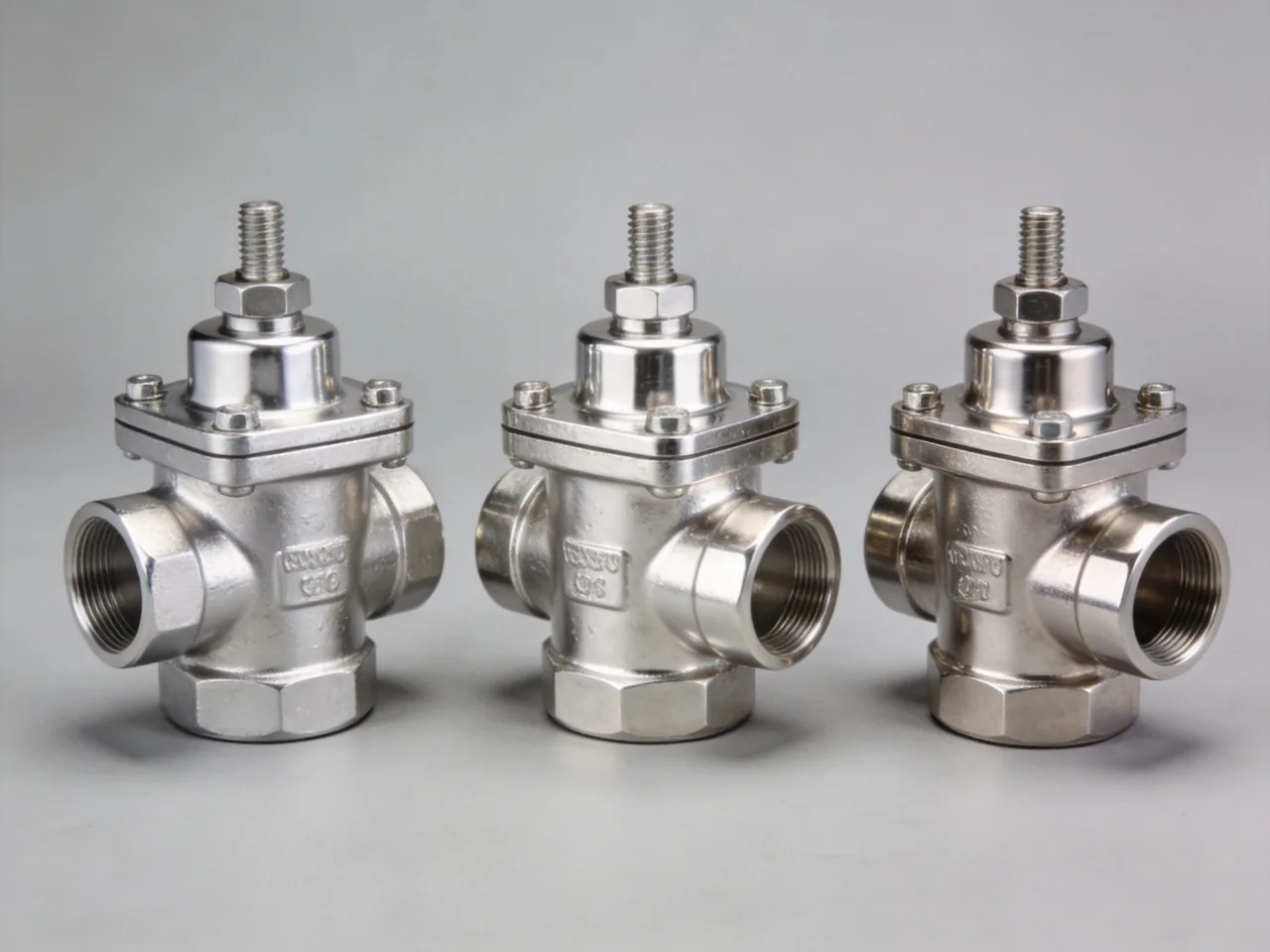
Stainless steel cast valve bodies in CF8, CF8M and 316 grades compared
CF8 (cast 304), CF8M (cast 316) and wrought 316 differ mainly by molybdenum content.

Choose CF8 (cast 304) for general corrosion service where chlorides are not a concern — clean water, steam, food, and many chemical duties. It is the lower-cost austenitic casting and performs well across a very wide temperature range. Choose CF8M (cast 316) whenever chlorides, seawater, or aggressive chemical media are present, because its molybdenum sharply improves resistance to pitting and crevice corrosion. The extra molybdenum is also why CF8M carries a higher minimum tensile strength than CF8.

The decision is therefore driven almost entirely by the corrosion environment. If the medium contains chlorides, specify CF8M; the cost premium is small against the cost of a pitting failure. If it does not, CF8 delivers the same mechanical service at lower cost.

CF8M vs 316: Cast vs Wrought

Because CF8M is the cast version of 316, the two share essentially the same corrosion resistance and chemistry. The practical difference is form and how you obtain the shape. 316 is wrought — bar, plate, and forgings — suited to machined-from-solid parts and standard sections. CF8M is poured to a near-net casting shape, which is the economical route for complex bodies such as valves, pump casings, and impellers that would be wasteful or impossible to machine from solid.

Wrought 316 typically shows slightly higher minimum mechanical properties than the cast CF8M because wrought processing refines the grain structure. For most pressure-boundary castings this difference is handled by designing to the ASTM A351 casting minimums. When a part is a complex shape, CF8M casting is usually the right and cheaper choice; when it is a simple machined component, wrought 316 may be simpler to source.

Selecting Between CF8, CF8M and 316

Reduce the choice to two questions. First, does the service see chlorides or aggressive chemicals? If yes, you need the molybdenum — CF8M (cast) or 316 (wrought). If no, CF8 (cast) or 304 (wrought) is sufficient and cheaper. Second, is the part a complex shape or a simple machined component? Complex shapes favor casting (CF8/CF8M); simple sections favor wrought (304/316).

For weldability-critical parts, consider the low-carbon variants CF3 and CF3M (cast 304L/316L), which resist sensitization during welding. Whatever the choice, design to the ASTM specification minimums for the grade and confirm the chemistry and mechanical certificate with the foundry. For the full family of cast grades, see our casting alloy comparison chart and CF8 / CF8M stainless page.

Low-Carbon Variants: CF3 and CF3M

Alongside CF8 and CF8M sit their low-carbon cousins, CF3 (cast 304L) and CF3M (cast 316L). The lower carbon content reduces the risk of sensitization — the precipitation of chromium carbides at grain boundaries during welding or prolonged high-temperature exposure, which can leave the metal vulnerable to intergranular corrosion. For parts that will be welded after casting, or that operate in the sensitization temperature range, the low-carbon grades protect corrosion resistance at the weld.

The trade-off is a small reduction in high-temperature strength, because carbon contributes to strength. CF3 corresponds to CF8 with chloride resistance unchanged, and CF3M corresponds to CF8M keeping the molybdenum benefit. When a CF8M part needs field welding, specifying CF3M instead is often the safer choice; for an unwelded casting in moderate temperature service, the standard CF8M is usually sufficient.

Typical Applications of Each Grade

The grades map cleanly to service environments. CF8 (cast 304) suits general industrial corrosion service: clean water, steam, food and beverage, and many mild chemical duties where chlorides are absent. CF8M (cast 316) is the default for chloride and chemical exposure — seawater valve and pump bodies, chemical-process equipment, pulp and paper, and coastal or marine service. Its molybdenum makes it the workhorse wherever pitting is a risk.

In valve and pump castings specifically, the choice often comes down to the handled medium. A water valve body might be CF8 or even carbon steel; the same valve for seawater or a chloride-bearing chemical would be specified CF8M. Because the cost difference is modest and a pitting failure on a pressure-boundary casting is serious, many specifiers default to CF8M whenever there is any doubt about chloride exposure, accepting the small premium as cheap insurance.

Temperature and Service Range

All three grades are austenitic and share an exceptionally wide temperature capability, but the limits differ by application. Cast austenitic grades like CF8 and CF8M serve from cryogenic temperatures up to around +649 °C in many references, retaining toughness at low temperature where carbon steels turn brittle. This makes them suitable for both cold service and elevated-temperature corrosion service, a versatility that carbon and low-alloy grades cannot match.

At sustained high temperature, the low-carbon variants CF3 and CF3M lose a little strength relative to CF8 and CF8M, because carbon contributes to elevated-temperature strength. Where both high temperature and welding are involved, the metallurgist balances sensitization risk against strength to pick the right variant. For most ambient and moderate-temperature corrosion service — the bulk of valve and pump applications — the standard CF8 and CF8M grades are the correct, proven choices.

Cost and Availability Trade-offs

The molybdenum that gives CF8M and 316 their chloride resistance also makes them more expensive than CF8 and 304, because molybdenum is a costly alloying element and its price can be volatile. For a buyer, this means specifying CF8M only where the service genuinely needs it: in clean, non-chloride duty, defaulting to CF8M wastes money for no corrosion benefit. The discipline of matching grade to environment is as much a cost decision as a metallurgical one.

Availability and lead time can also differ. Common grades like CF8 and CF8M are widely produced and readily quoted by most steel foundries, while specialty grades or tight chemistry restrictions may narrow the supplier pool and extend lead time. When a project allows either CF8 or CF8M to meet the service, choosing the standard grade keeps both cost and supply risk down — another reason to define the corrosion requirement precisely before specifying the more expensive molybdenum-bearing grade.

Welding and Fabrication Considerations

Cast austenitic stainless parts are frequently welded — to piping, to other components, or for repair — and the grade choice affects how forgiving that welding is. Standard CF8 and CF8M can be welded, but the heat of welding can drive chromium-carbide precipitation at grain boundaries (sensitization), locally reducing corrosion resistance. For thin sections, multi-pass welds, or service in the sensitization range, the low-carbon CF3 and CF3M grades are the safer choice because their reduced carbon minimizes this effect.

Post-weld solution annealing restores full corrosion resistance by redissolving the carbides, but it is not always practical on large or field-welded assemblies. This is why the low-carbon variants exist: they let fabricators weld without a mandatory post-weld heat treatment. When specifying a cast stainless part that will be welded after casting, discuss the welding plan with the foundry so the right carbon grade and any post-weld treatment are agreed before production, not discovered afterward.

Summary: Choosing CF8, CF8M or 316

The three grades are closely related austenitic stainless steels separated by two simple distinctions. Molybdenum separates CF8 (none) from CF8M and 316 (about 2–3%), which decides chloride and pitting resistance. Manufacturing route separates CF8M (cast to shape) from 316 (wrought bar and plate), which decides how you obtain a given part. Hold those two distinctions in mind and the selection becomes straightforward for almost any cast valve or pump component.

For a complex cast part in chloride or chemical service, specify CF8M; for the same part in clean, non-chloride service, CF8 saves cost; and where the equivalent component is a simple machined section rather than a casting, wrought 316 or 304 may be the easier route. Confirm the grade, heat-treat condition, and certification with your foundry, and the part will deliver the corrosion resistance and strength its grade promises.

Frequently Asked Questions

Are CF8M and 316 the same?

CF8M and 316 are very close but not identical. CF8M is the casting grade under ASTM A351, and 316 is the wrought designation; CF8M is the cast equivalent of 316. They share essentially the same chemistry, including the ~2–3% molybdenum that gives chloride resistance. The difference is the manufacturing route — CF8M is poured to shape, 316 is wrought bar or plate.

What is the difference between CF8 and CF8M?

The key difference is molybdenum. Both are austenitic stainless casting grades under ASTM A351; CF8 is the cast equivalent of 304 and CF8M is the cast equivalent of 316. CF8M adds about 2–3% molybdenum, which significantly improves resistance to pitting and crevice corrosion in chlorides and chemical media, and gives it a slightly higher minimum tensile strength than CF8.

Is CF8 the same as 304?

CF8 is the cast equivalent of wrought 304 stainless steel. They have very similar chemistry and corrosion behavior, but CF8 is defined as a casting grade under ASTM A351 and is poured to shape, while 304 is wrought bar, plate, or sheet. For a cast valve or pump body in general (non-chloride) corrosion service, CF8 is the grade that corresponds to 304.

When should I choose CF8M over CF8?

Choose CF8M over CF8 whenever the service contains chlorides, seawater, or aggressive chemical media. The molybdenum in CF8M provides much better resistance to pitting and crevice corrosion than CF8, which lacks molybdenum. In clean, non-chloride service such as water, steam, or food, CF8 performs the same mechanically at lower cost, so the chloride environment is the deciding factor.

Is cast CF8M as strong as wrought 316?

Wrought 316 typically shows slightly higher minimum mechanical properties than cast CF8M because wrought processing refines the grain structure. For pressure-boundary castings this difference is handled by designing to the ASTM A351 minimums for CF8M. For complex shapes such as valve and pump bodies, CF8M casting is the practical and economical choice; for simple machined parts, wrought 316 may be easier to source.
Need help specifying or costing your casting?

Tell us the part, material, and quantity. Our engineers will recommend the right approach and provide a detailed quotation.

Request a Quote Case Studies