Valve Casting Methods Compared

Valve bodies can be produced by several casting methods, and the choice drives tolerance, machining allowance, and cost. Here is how investment casting, sand casting, and shell molding compare for valve work — and how to choose by valve type and size.

Direct answer: Valve bodies are most often produced by investment casting or sand casting. Investment casting gives tight tolerances (about ±0.1 mm, CT4–CT7) and a fine surface (Ra 1.6–3.2 µm), cutting machining on sealing faces by up to ~40% — ideal for small-to-medium valves in volume. Sand casting is looser (about ±0.5 mm) and rougher but has no practical size limit, making it the choice for large valve bodies and lower volumes. Shell molding sits in between.

Why Valve Bodies Are Sensitive to Casting Method

A valve body is a pressure boundary with precision sealing faces, seat pockets, and flange interfaces. The casting method sets how close the as-cast part is to final shape — which decides how much machining stock those critical surfaces need, how much porosity risk exists at thin sections, and ultimately the cost and integrity of the finished valve. That is why the same valve can be quoted very differently depending on whether it is investment-cast or sand-cast.

Investment Casting for Valve Bodies

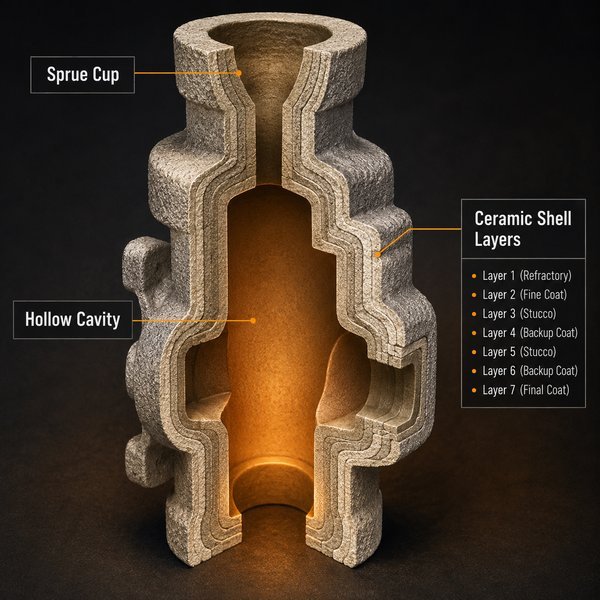
Investment (lost-wax) casting builds a ceramic shell around a wax pattern, giving excellent dimensional control and surface finish. For valves it holds roughly ±0.1 mm (CT4–CT7) with a surface around Ra 1.6–3.2 µm, so sealing faces and bores need far less machining — up to about a 40% reduction versus sand. It handles complex internal passages and thin walls well, making it the standard route for small-to-medium valve bodies in stainless and alloy steels at medium-to-high volume. See our valve casting guide for materials and standards.

Ceramic shell mold used in investment casting of valve bodies
The ceramic shell built around the wax pattern gives investment casting its tight tolerance and fine finish.

Sand Casting for Valve Bodies

Sand casting forms the mold from bonded sand around a reusable pattern. It is looser on tolerance (about ±0.5 mm, CT9–CT13) and rougher (Ra 6.3–12.5 µm), so it leaves more machining allowance on critical faces. Its decisive advantage is size: there is no practical upper weight limit, and tooling is cheaper. For large industrial valve bodies, or low volumes where amortizing investment tooling does not pay, sand casting is usually the economical choice.

Shell Molding & Other Methods

Shell molding uses a resin-bonded sand shell to deliver better tolerance and finish than green-sand casting while keeping moderate tooling cost — a useful middle ground for medium valve bodies in medium volume. Centrifugal casting is used for specific cylindrical valve components. For most valve bodies, though, the real decision is investment versus sand.

Valve Casting Methods: Side by Side

FactorInvestment CastingSand CastingShell Molding
Tolerance±0.1 mm (CT4–CT7)±0.5 mm (CT9–CT13)Between the two
Surface finish (Ra)1.6–3.2 µm6.3–12.5 µm~3.2–6.3 µm
Size / weight rangeSmall–medium (oz to ~50 kg)No practical upper limitSmall–medium
Machining allowanceLowest (near net shape)HighestModerate
Tooling costHigher (wax die)Lower (pattern)Moderate
Best volume fitMedium–highLow–medium / large partsMedium

Machining Allowance & Total Cost

The as-cast tolerance of each method translates directly into machining stock — and machining is often the largest single cost in a finished valve body. An investment-cast body arrives close to net shape, so flange faces, seat pockets, and bores need only light finishing; sand castings carry more allowance and demand heavier stock removal on every critical surface. That is why a higher casting piece-price for investment casting frequently produces a lower total cost once machining, tooling wear, and scrap are added up, especially at medium-to-high volume.

The break-even mirrors the broader casting-versus-machining trade-off: investment casting's wax tooling has to be amortized, so for one-off or very large bodies sand casting's low tooling cost usually wins, while repeat production of small-to-medium valves favors investment casting. For the underlying economics, see our investment casting vs CNC machining comparison.

Pressure Integrity & Testing

No matter the method, a valve body is only acceptable if its pressure boundary is sound. Investment casting's finer control reduces porosity risk at thin sections and sealing faces, but every casting route relies on verification: dye-penetrant or magnetic-particle inspection for surface defects, radiographic or ultrasonic testing for internal soundness, and a hydrostatic shell test on the finished valve (for example to API 598). Material is confirmed against the specified ASTM grade — match the method to the body size and volume, but never let method choice substitute for proper NDT and pressure testing.

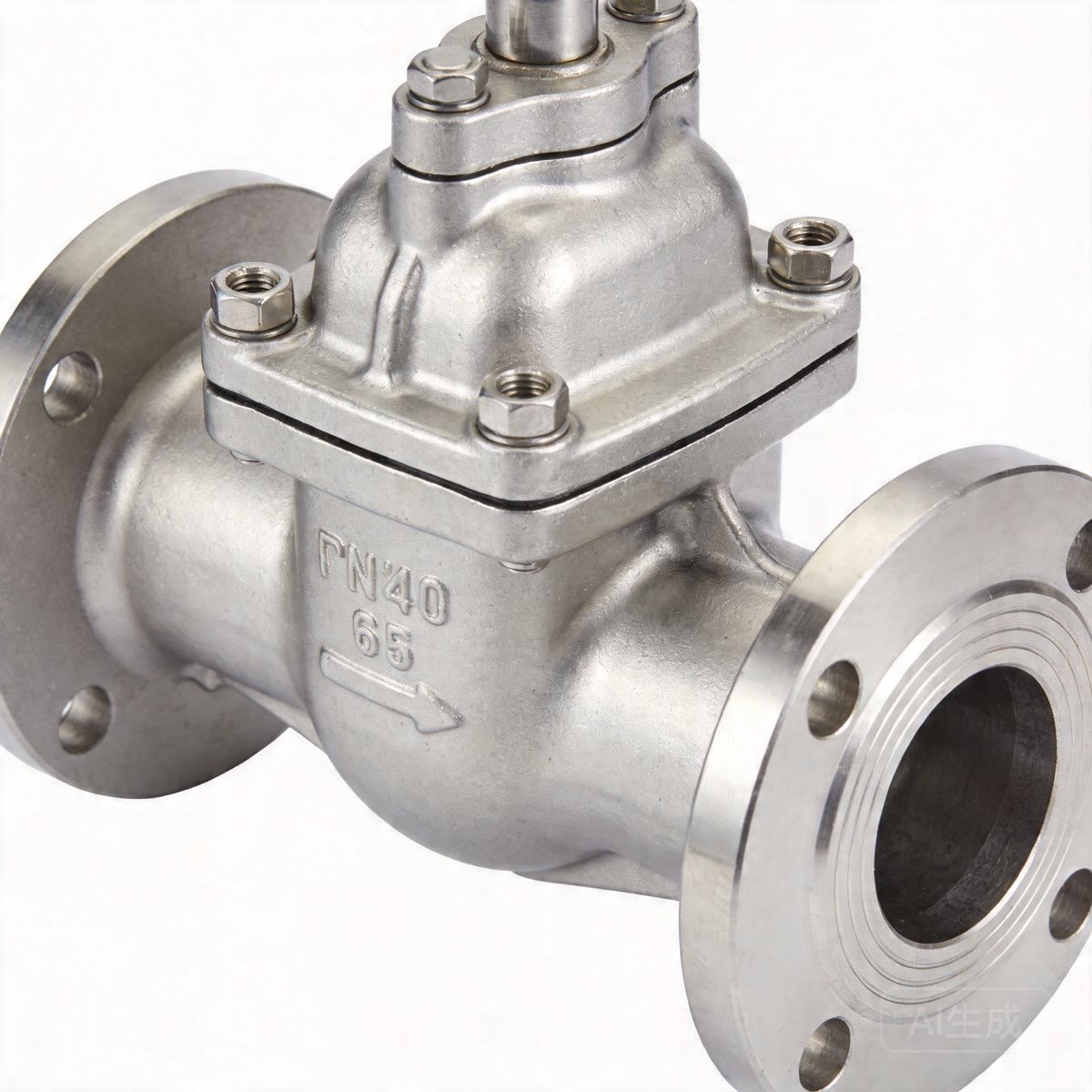
Investment-cast stainless steel valve body
A finished cast valve body — the casting method set its sealing-face tolerance and machining allowance.

Choosing by Valve Type & Size

  • Small-to-medium valves (ball, check, instrument, control) in stainless or alloy steel — investment casting for tolerance, finish, and minimal machining.
  • Large industrial valves (big gate, butterfly, or body castings beyond ~50 kg) — sand casting for unlimited size and lower tooling cost.
  • Medium bodies in medium volume — shell molding can balance finish and cost.

Whatever the method, validate the casting with NDT and hydrostatic testing to the applicable standard, and pair it with the right alloy — see our casting alloy comparison chart.

Frequently Asked Questions

How are valve bodies usually cast?

Most valve bodies are produced by investment casting or sand casting. Investment (lost-wax) casting is preferred for small-to-medium valves that need tight tolerances and fine surfaces with minimal machining; sand casting is used for large bodies and lower volumes where size matters more than as-cast precision.

Which casting method gives the best tolerance for valve bodies?

Investment casting. It holds roughly ±0.1 mm (CT4–CT7 per ISO 8062) with a surface finish around Ra 1.6–3.2 µm, versus about ±0.5 mm and Ra 6.3–12.5 µm for sand casting — which is why investment-cast valve bodies need less machining on sealing faces and bores.

When is sand casting the better choice for a valve body?

When the body is large or heavy, or the volume is low. Sand casting has no practical upper size limit and lower tooling cost, so for big industrial valves or short runs it is more economical even though it needs more machining allowance.

Does the casting method affect pressure integrity?

Yes, indirectly. All methods can produce sound pressure-boundary castings, but investment casting's finer detail and tighter control reduce the risk of porosity at thin sections and sealing faces. Whatever the method, valve castings should be validated with NDT and hydrostatic testing per the applicable standard (for example API 598).

How much machining does investment casting save on a valve body?

Because investment-cast bodies are closer to net shape with better surface finish, they can reduce downstream machining by up to about 40% compared with sand castings — mainly on flange faces, seat pockets, and bores that would otherwise need heavier stock removal.
Choosing a casting method for your valve body?

Share your valve type, size, pressure class, and volume. We will recommend the casting method that balances tolerance, machining, and cost for your program.

Request a Quote Case Studies