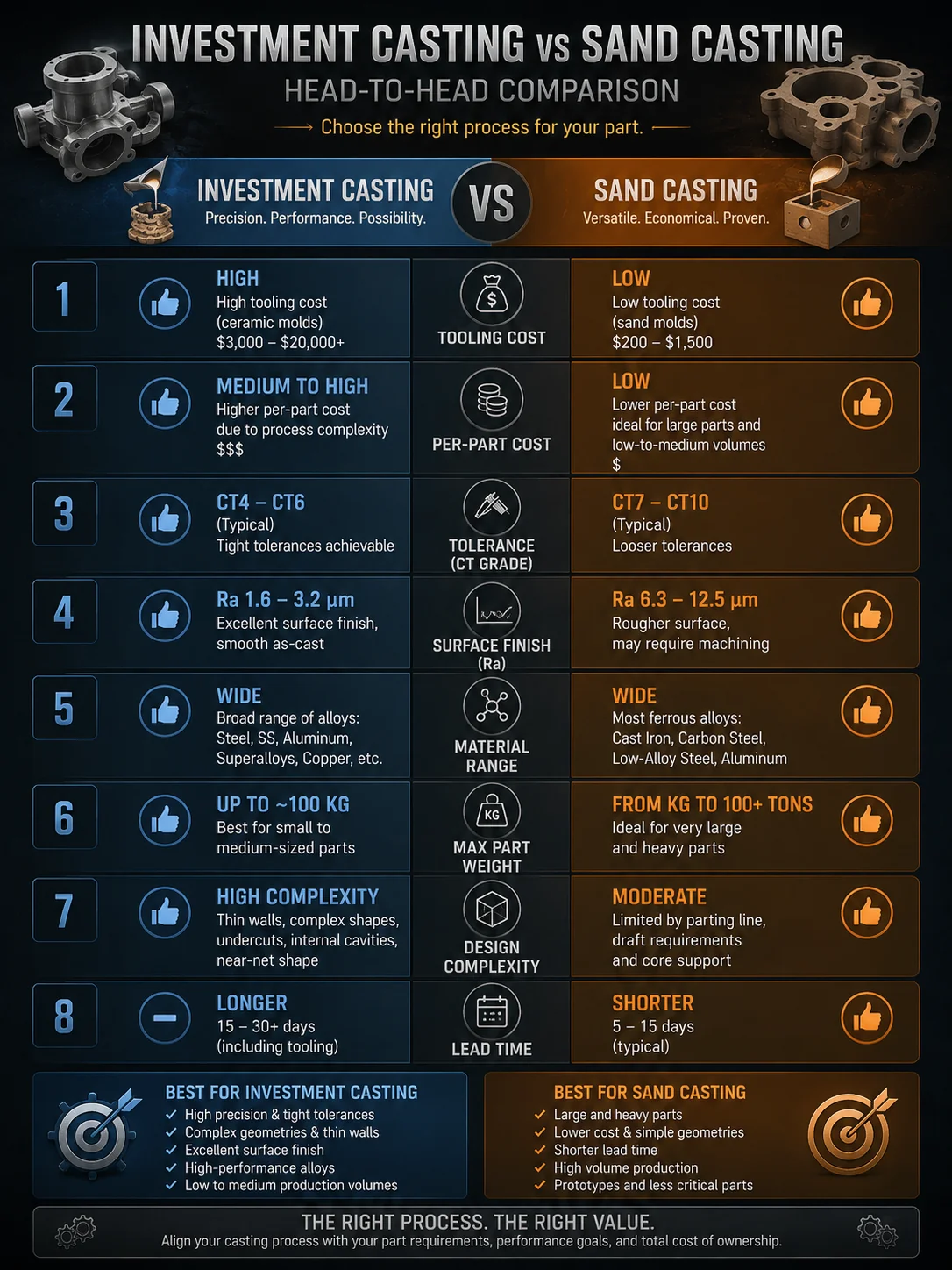
Objective, data-driven comparisons to help you choose the right casting route for valves, pumps, and industrial metal components.

Tolerances, surface finish, tooling vs per-part cost by volume, material options, and when to use a sand prototype before investment production.
Read Article
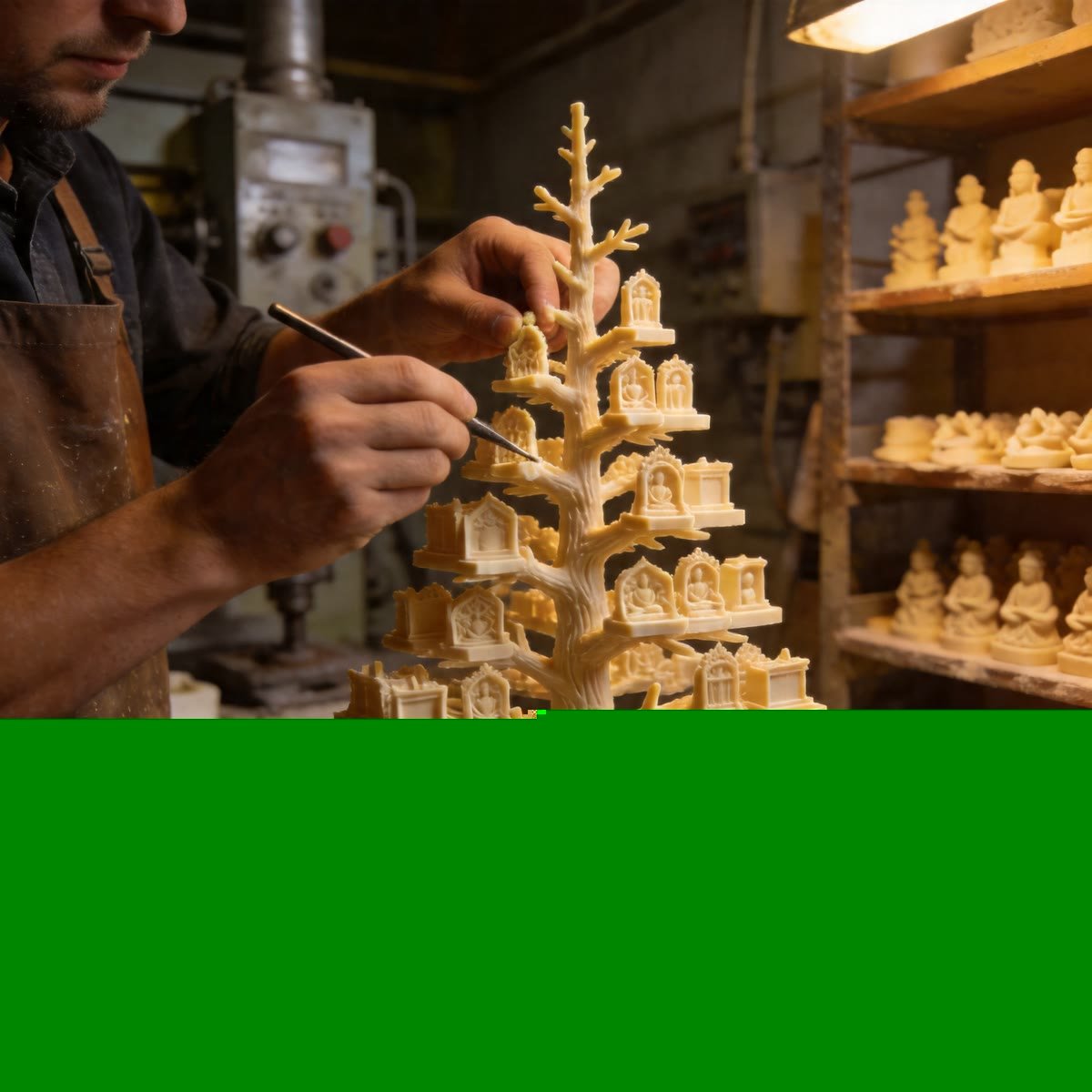
Cost, tolerance, the volume break-even, material waste and lead time — plus the hybrid cast-then-machine approach.
Read Article
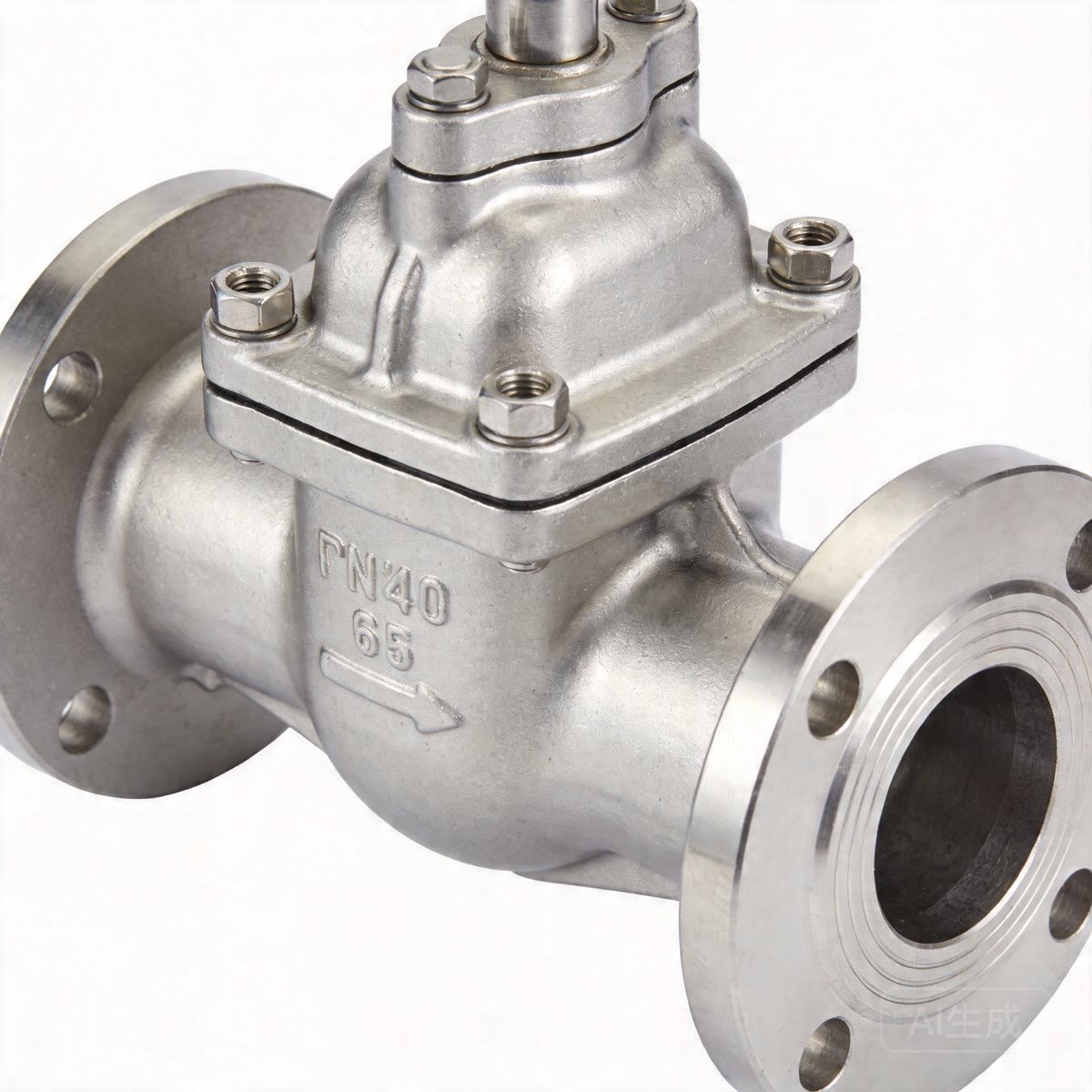
Investment vs sand vs shell molding for valve bodies — tolerance, finish, size range, machining allowance and cost.
Read ArticleChoosing a casting process and a casting material is one of the biggest cost and quality decisions in any metal-parts project. The route you pick — investment casting versus sand casting, casting versus CNC machining, or one molding method versus another for a valve body — drives your tooling spend, your achievable tolerances, your surface finish, your lead time, and your per-part cost at volume. Once tooling is cut and a process is locked in, changing direction is slow and expensive, so the time to compare options is before you commit.
This page is a hub that collects neutral, side-by-side comparisons of the most common casting decisions. Each linked guide lays out the trade-offs in plain engineering terms — what each option does well, where it falls short, and roughly where the cost break-even sits as volume changes — so design engineers and buyers can weigh the facts and decide with confidence. It is a starting point for scoping a part, not a substitute for a quote on your specific drawing.
Pick the decision that matches where you are in your project. Each resource below is a side-by-side comparison covering the trade-offs that actually move cost and quality. If your exact decision is not listed yet, the closest guide will still cover most of the same drivers — and you can always ask us for guidance on your specific part.
| If you're deciding between... | See | What it covers |
|---|---|---|
| Investment casting vs sand casting | Investment Casting vs Sand Casting | Tolerances, surface finish, tooling cost vs per-part cost by volume, material options, and when to run a sand prototype before committing to investment production. |
| Casting vs machining a part from solid | Investment Casting vs CNC Machining | Cost, tolerance, the volume break-even point, material waste, lead time, and the hybrid cast-then-machine approach for tight features. |
| Which casting method for a valve body | Valve Casting Methods Comparison | Investment vs sand vs shell molding for valve bodies — tolerance, surface finish, size range, machining allowance, and relative cost. |
| Choosing the casting material (grey vs ductile iron, iron vs cast steel) | Talk to our engineering team | Material property trade-offs — strength, ductility, machinability, corrosion and wear behaviour — matched to your service loads. We can advise on your drawing while a dedicated material guide is in progress. |
| Casting vs forging for your part | Talk to our engineering team | When near-net-shape casting beats forging on geometry and cost, and when forged grain flow is worth it for highly stressed parts. Send your part details for a route recommendation. |
These comparisons are written for the people who scope and source cast metal parts. Design engineers use them early to choose a process before locking geometry; sourcing and procurement teams use them to sanity-check supplier recommendations and understand cost drivers; and project engineers use them to balance tolerance, lead time, and budget across a build. The same decisions recur across automotive components, industrial machinery, pumps and valves, municipal hardware, rail, and general engineering work — anywhere a part could be cast, machined from solid, or forged.
Our goal here is to help you decide on the facts, not to push one route. As a working iron and steel casting foundry, we run these processes day to day, and we have written these comparisons to be neutral and engineering-based — the same trade-offs we walk through with our own customers. Use them to frame your decision, then bring your drawing for specifics.
It depends on volume and tolerances. Sand casting has low tooling cost, so it usually wins for low volumes and larger or looser-tolerance parts. Investment casting costs more in tooling but delivers tighter tolerances and better finish, often reducing machining, so it pulls ahead at higher volumes. Our investment vs sand casting guide shows where the break-even tends to fall.
Machining from solid suits low quantities, very tight tolerances, or simple shapes. Casting becomes more economical as volume rises and as geometry gets more complex, because it gets you close to net shape with less material waste. Many parts use a hybrid approach: cast the body, then machine only the critical features. See our investment casting vs CNC machining comparison.
Choose ductile (nodular) iron when the part needs higher tensile strength, ductility, and impact resistance — typical of pressure-bearing or shock-loaded components. Grey iron is a strong choice where you want good machinability, damping, and lower cost, and the part is mainly under compression. The best fit depends on your service loads; send us your drawing and we will advise.
Once you have narrowed your process and material, send your drawing, target tolerances, material spec, and expected annual volume to our team through the contact page. Our engineers will review feasibility, suggest the best casting route if you are still unsure, and return a quote for your specific part. Start at our <a href="/contact-us/">contact page</a>.